How to Clean Doll Hair
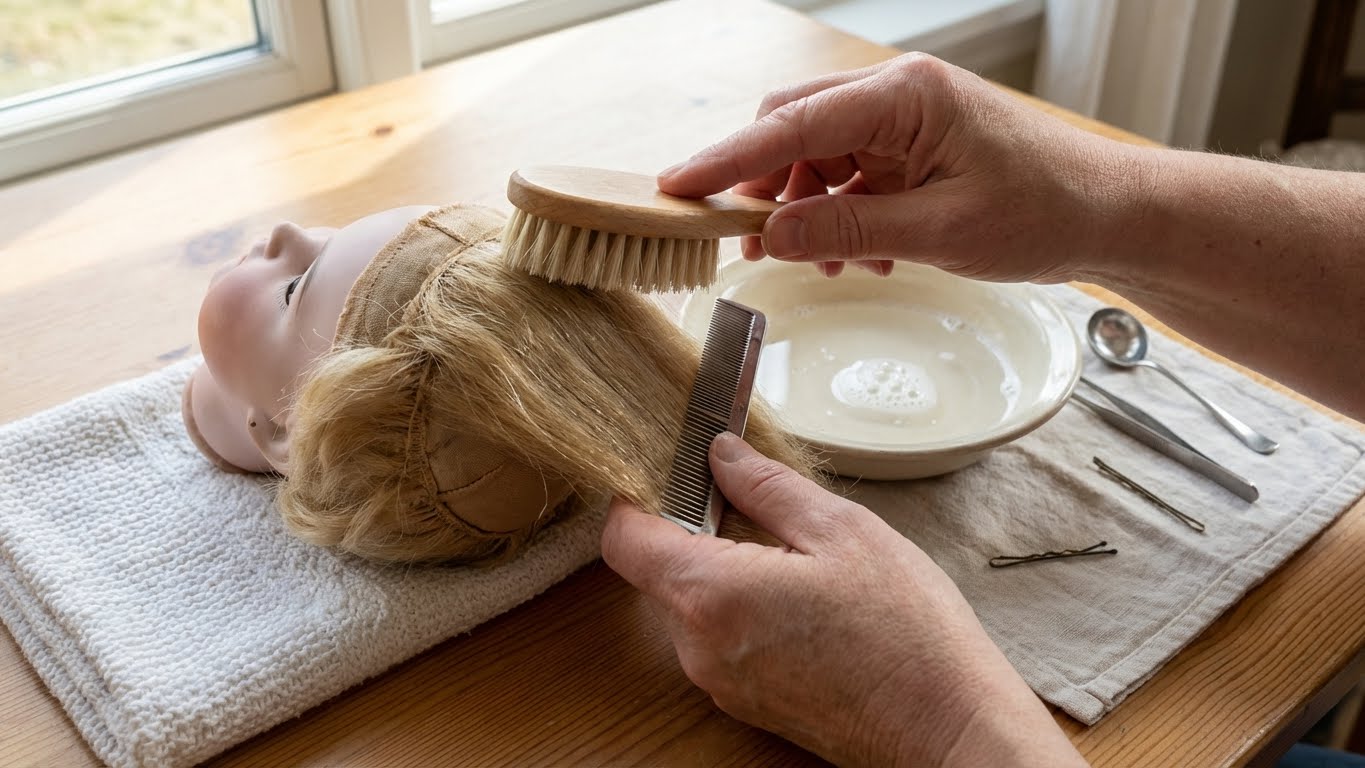
When it comes to cleaning a doll, especially Barbie or American Girl dolls from the 80s, you must be cautious about the type of materials they are made from. For wooden dolls, porcelain, ceramic, or bisque dolls, the base, scalp, head, and surface need special attention. Using the wrong agents or letting liquids soak the interior can penetrate the finish, deteriorate the material, and even disintegrate the doll base. I’ve learned from experience that removing a wig or hair attachment first is the safest way to ensure no damage occurs. Always use safe cleaning methods, keep moisture controlled, and avoid submerging fragile collectors’ antique dolls. Areas like the cavity, eyes, and movable parts should stay dry to prevent mildew, mold, or fluorescence of odors.
Even dolls with tangled, dull, or unkempt hair can be restored with simple tricks. For Barbie or rubber bands affected Saran hair, I use fabric softener in a Downy Dunk method, carefully following tutorials to detangle doll hair and fix doll hair. Hair that is dirty, hard, or glued can be gently cleaned, restoring luster and shine while eliminating pet, smoke, or other odors. This inexpensive, safe approach works for high end collectors, local store dolls, or discount investments, keeping hair, surface, and doll base well maintained for long playtime and longevity. Using an absorbent cloth, allowing air circulation, and drying the scalp or head carefully ensures the materials remain intact, clean, and ready for fun while preventing damage to fragile parts.
Caracul and Wool Hair
When it comes to cleaning a doll with Caracul or Wool, the approach can be delicate because these fibers are often glued directly to the head or base of the wig. Using liquid cleaners or water can sometimes cause matting of the hair or loosen the adhesive and glue, so it’s important to be cautious. I’ve found that applying a light sprinkle of talcum or cornstarch first can help, and then using a fine, soft brush or toothbrush to gently remove powder makes the hair look smooth and fresh without causing damage.
Even though it may seem tricky, these simple steps work well for Caracul and Wool fibers. By being careful, you can clean the doll’s hair, detangle it, and restore softness. Always handle the head, base, and wig attachment gently, making sure not to let liquid penetrate the fibers or loosen the glue. I’ve personally used this method to clean both antique and modern dolls, and it really helps hair stay neat, shiny, and free of matting while keeping the adhesive intact.
Supplies needed:
- Supplies Needed
Description
Large shallow dish or bowl
To hold water and fabric softener for soaking doll hair
Ladle
To pour water or fabric softener gently over the hair
Liquid fabric softener
Softens the doll hair and helps detangle
Wide tooth comb
To gently comb through tangled or knotted hair
Fresh water
For rinsing the doll hair after soaking
Towel
To dry the doll hair carefully without causing damage
Directions
- When preparing to clean your doll, remove all clothing to prevent it from getting wet or stained. Cover the eyes with tape to protect them from water and avoid rust or damage to delicate areas. I usually fill a dish with a shallow amount of fabric softener and 1/2 fill it with water, creating a gentle container for soaking the hair. Using a ladle, slowly pour liquid over the head to absorb as much softener as possible, covering any portion of hair that isn’t fully soaking in the bowl.
- . Next, try to untangle any knots with your fingers while the hair is soft. Allow the doll to soak for several minutes before removing it and rinsing the hair with cool water. Use a towel to dry gently, and then a comb to pick through tangles carefully. Smooth the hair by hand without applying heat or other harsh products, as this helps maintain manageability and avoids damaging the fibers.
- After the initial cleaning, let the hair air dry completely while combing occasionally. This process works even if the hair is badly damaged or tangled. For extra care, you can finish with a detangling spray or shine spray, adding shine and improving manageability. Avoid putting rubber bands or other accessories in the hair for at least 24 hours, until the head is fully dry.
- Finally, this method is a simple trick many collectors use before rewigging or tossing dolls. Following this procedure at home can give your doll a fresh, new look. It’s a safe, inexpensive way to restore hair while keeping fibers, head, and wig base intact. With some patience, soaking, careful combing, and proper drying, the doll’s hair can remain soft, shiny, and ready for playtime.
Human Hair and Mohair
When it comes to cleaning a doll’s hair, it is important to handle the fibers and attachment carefully. Many doll wigs are sewn onto a wig base and then glued to the head. Always carefully remove the wig base from the scalp if needed to prevent damage. Using a tail comb, hairpin, or embroidery needle, you can gently untangle snarls and tangles. If hair begins to pull out, switch to a soft-bristled brush to work from the ends to the wig base, keeping the hair smooth and free from knotting or matting. Any leftover glue residue can be removed with fingernails or tweezers carefully.
Next, to soak the hair, prepare a mixture of mild shampoo and cold water in a pint-sized container. Add a few drops to ensure the solution is sufficient. Let the doll wig soak for several minutes, then rinse by running cool water through the hair. It is important to avoid massage or lather at NO TIME, as this can cause matting and knotting of the fibers.
Finally, gently comb through the hair, smoothing it by hand, and let it air dry completely. Using these careful cleaning steps preserves the wig base, doll wig, and the delicate fibers while maintaining a soft, smooth finish. By handling hair with patience and using proper tools like tail combs, soft-bristled brushes, and tweezers, even stubborn snarls and tangles can be removed. This method ensures that your doll’s hair remains neat, healthy, and ready for playtime or display.