20 Quick and Easy Braids for Black Hair
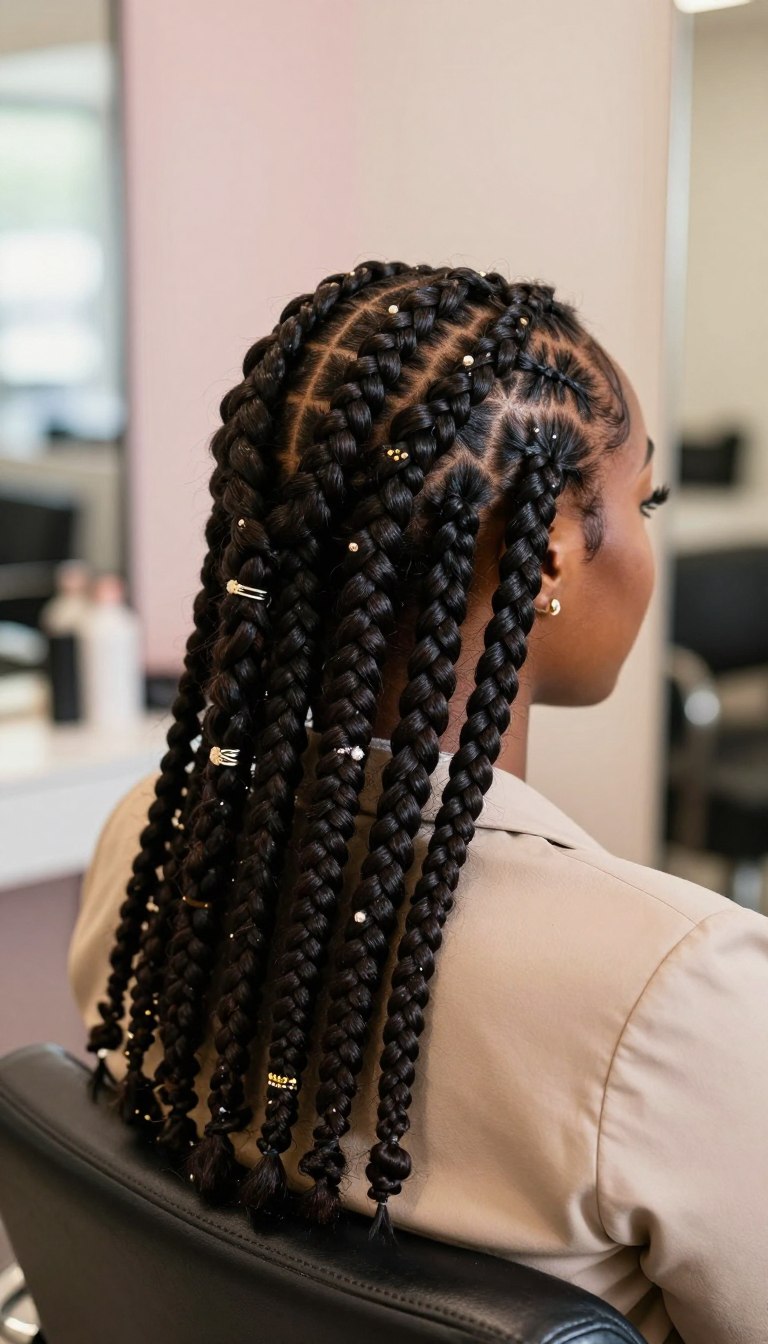
Braids are a versatile, practical way to shape a daily look while protecting strands. This introduction sets expectations for fast, repeatable styles you can do in the morning or after a workout.
By “quick” we mean three things: easy at-home steps on natural hair, simple tweaks when you already have braids, and fast upgrades with accessories. Each tip aims to be doable on tight schedules or last-minute calls.
You’ll find sections on close-to-scalp cornrows, two-braid looks, twists that mimic braids, ponytails, buns and Fulani-inspired details. Short and shoulder-length options and color or texture ideas are included.
Pick a style based on time, length, activity level, and whether hair will get wet. Protective styling is a priority here; expect tips to reduce tension, avoid heavy weight, and protect edges and the scalp.
What you’ll need: a comb, elastics, an edge brush, gel, and a light oil. See the prep section next for cleaner, longer-lasting results.
How to Choose a Quick Braid Style That Fits Your Day
Start by matching a braid to your schedule so styling doesn’t slow you down. If you need a true 5-minute out-the-door option, pick a low‑maintenance look you can do from existing sections or a simple two‑strand twist. If you have 15 minutes, go for neat parts or scalp-close cornrows that stay tidy longer.
Think about activity: exercise increases frizz at the roots and pool time can reveal shrinkage where natural strands peek through extensions. Choose chunkier styles when you want something lighter and less sweaty, and smaller braids when you need long wear and definition.
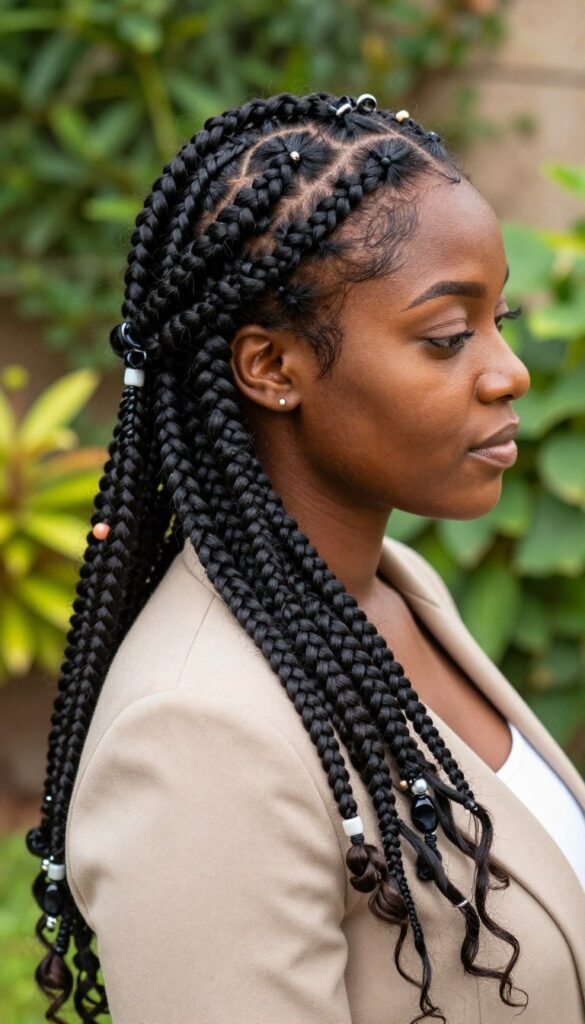
Use this quick length check: about 2 inches lets you wear short braided looks safely; 4–5 inches is a better base if you plan to add long extensions. Fine texture usually holds smaller sections well. Thicker texture can handle larger, heavier styles comfortably.
- Schedule-first choice: match the look to the minutes you have.
- Activity rule: avoid styles that puff up or show natural shrinkage after sweat or water.
- Comfort and scalp health: prioritize loose parts and lower tension if you feel soreness.
Expect most styles to last 4–6 weeks with care; smaller sections often keep a cleaner look longer, while thicker sections can frizz sooner. Make the choice that protects your scalp and fits your daily life.
Hair Prep for Fast Braiding and a Clean Finish
Good prep makes any braid style faster, neater, and kinder to your scalp.
Follow a short flow: detangle, lightly stretch, moisturize, then part. Detangle in small sections so you don’t rip strands. Use a combing cream like Black Vanilla 4-in-1 Combing Creme to ease knots and reduce pull.
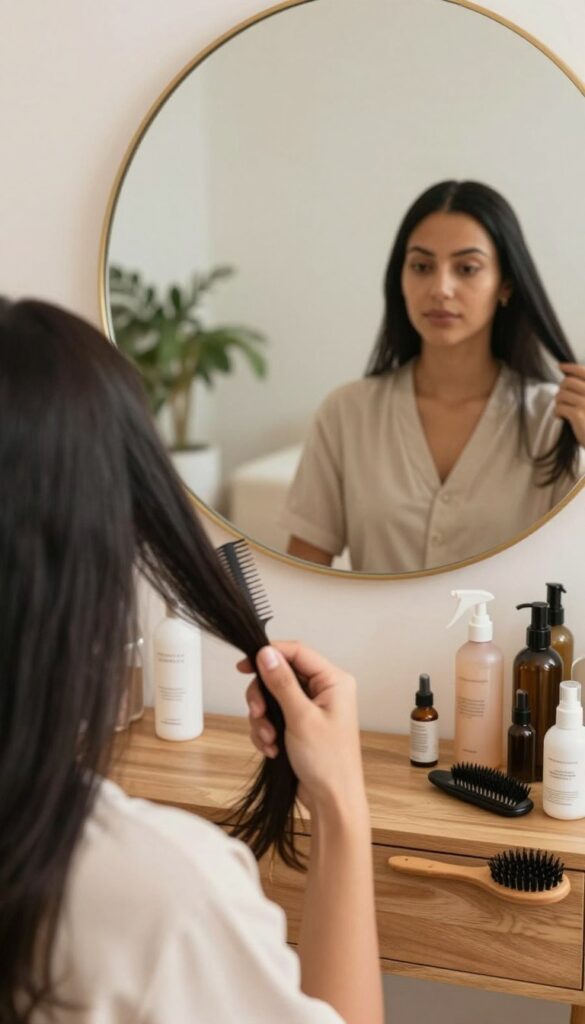
Apply a light moisturizer for slip, then a tiny bit of gel or edge control where you need grip. Mimosa Hair Honey or a similar oil adds shine without heavy buildup. This keeps finishes smooth and flake-free.
- Detangle gently in small sections to protect the scalp and reduce breakage.
- Part with a comb tail, clip away extra hair, and check symmetry at the crown and hairline.
- Prep the night before—detangle and twist or braid to stretch tighter textures.
- Remember: good prep is protective styling. Less tugging means healthier strands and less irritation later.
20 quick braids for black hair you can wear on repeat
Build a small rotation of reliable looks so styling feels effortless every week.
This master list groups twenty ideas that are fast to do on natural hair and fast to style when you already have box braids or cornrows as a base. It cycles through cornrows, French braids, box braid options, knotless/feed-in methods, and twist styles that mimic a braid look.
Pick two or three go-tos to repeat based on time, workplace or school rules, and length. Choose chunkier styles if you want lighter maintenance and smaller sections when you need long wear.
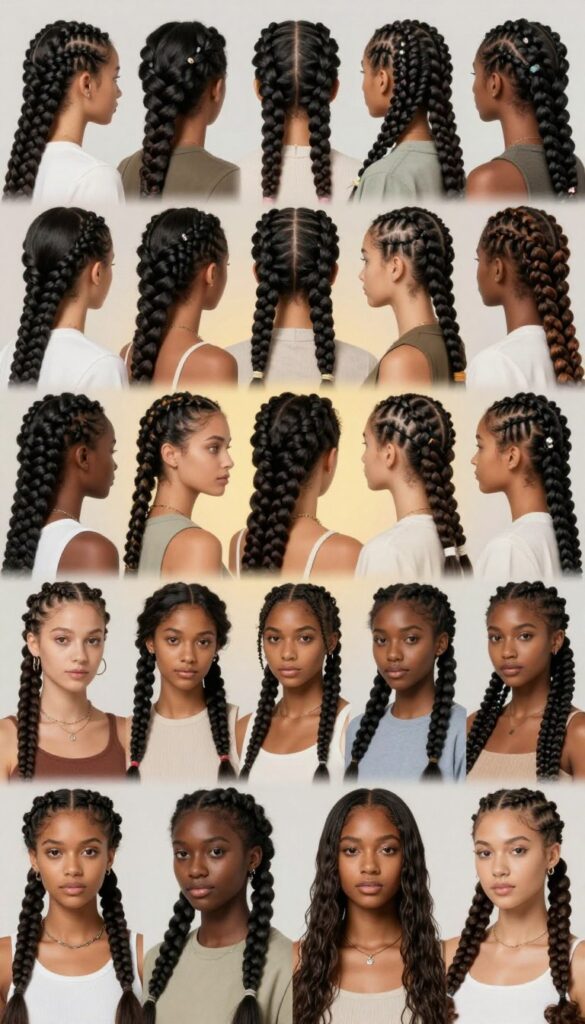
- Quick-to-do on natural strands vs quick-to-style on installed bases.
- Box braids act as a versatile base; cornrows sit raised and close to the scalp.
- French braids use an overhand technique; cornrows use an underhand method.
- Knotless or feed-in braid methods reduce tension by feeding in hair rather than anchoring with a knot.
Glossary tip: ask your braider for “feed-in” or “knotless” to lower root stress, and say “French” when you want an overhand weave. Small changes in parting or pattern change the entire vibe, so repeating styles never gets dull.
Next, we break these ideas into mini collections so you can scan cornrow looks, two-braid options, and twist-based styles quickly.
Quick Cornrow Styles That Stay Close to the Scalp
Cornrows lock a clean, low-profile look that stays close to the scalp and moves with your day.

These styles are a go-to because they are simple, neat, and work on natural hair or with added extensions. They sit flat on the head and resist daily friction.
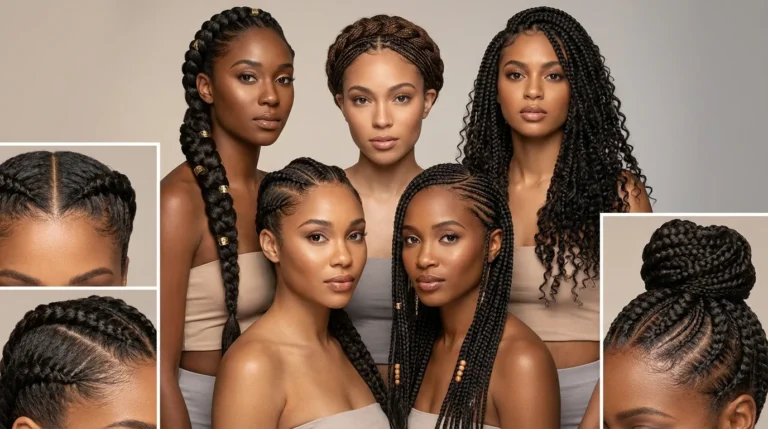
- Straight-back cornrows — classic rows from hairline to nape for a tidy finish.
- Side-part cornrows — shift the part to one side for a softer frame.
- Zig-zag part cornrows — add a playful pattern without extra time.
- Two or three jumbo cornrows — a minimalist option that braids fast and wears light.
An elevated but still fast pick is stitch braids. Alternate thick and thin sections; the contrast in parting gives a stitched design that looks intentional with little extra work.
For a practical ponytail, braid rows toward the top head, gather at the crown, secure, and wrap the ends into one chunky braid if you like. This keeps hair safe during work and workouts.
Watch for tightness and frizz after sweat or water. Don’t braid very tight, use a light oil at the scalp, and tie down with a silk scarf. Finish edges by smoothing a tiny gel and laying baby hairs with a soft brush for a polished, fast result.
Fast Two-Braid Looks When You’re Short on Time
When minutes are tight, two-braid styles give a neat, finished look with almost no fuss.
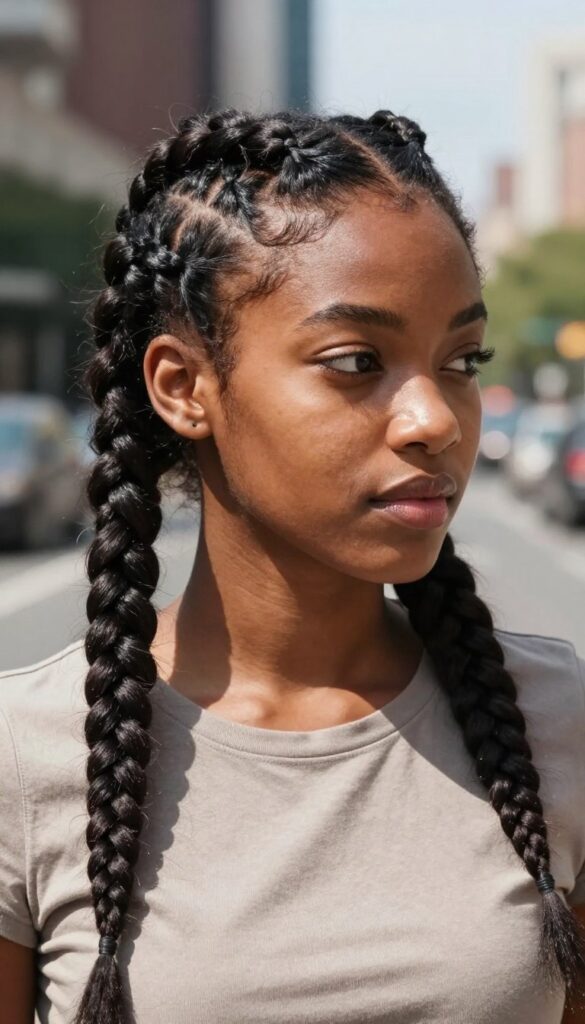
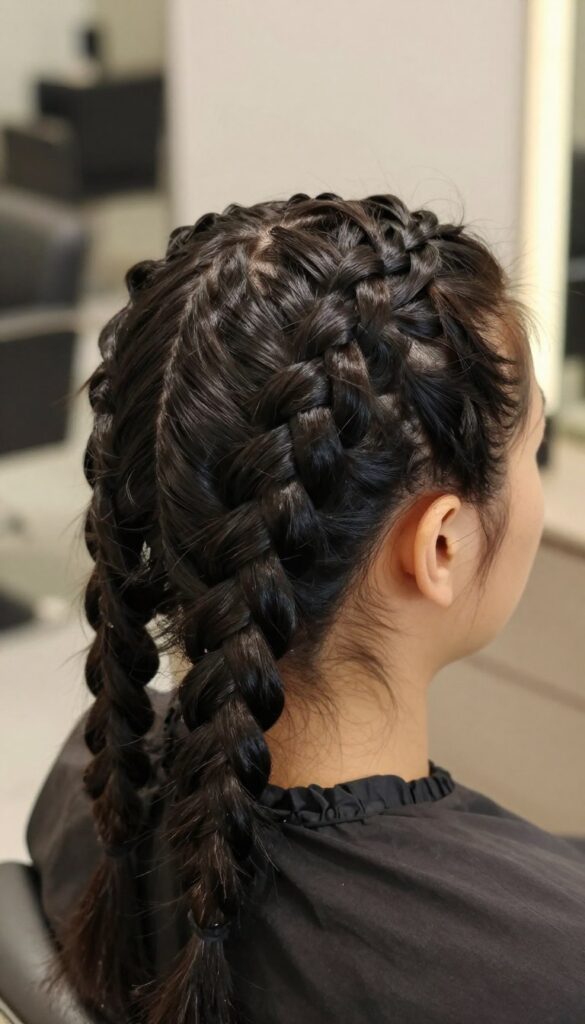
Try this simple menu when you need a reliable style: two cornrows, two French braids, or two jumbo pigtail braids. Each option changes the feel of the look while staying quick to do.
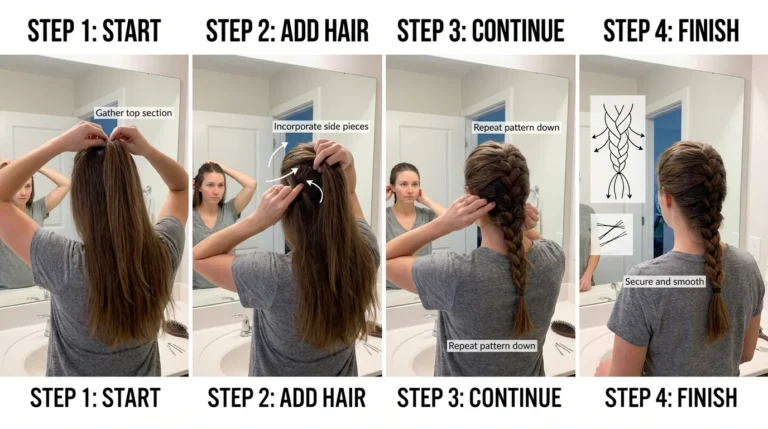
French braids use an overhand weave and lie flatter in the middle of each section. Cornrows use an underhand method and sit a bit raised near the scalp. Choose French braids if you want softer edges and choose cornrows if you want definition at the top head and back.
- Use a comb to split a clean middle part; clip one side and braid the other to keep both sides even.
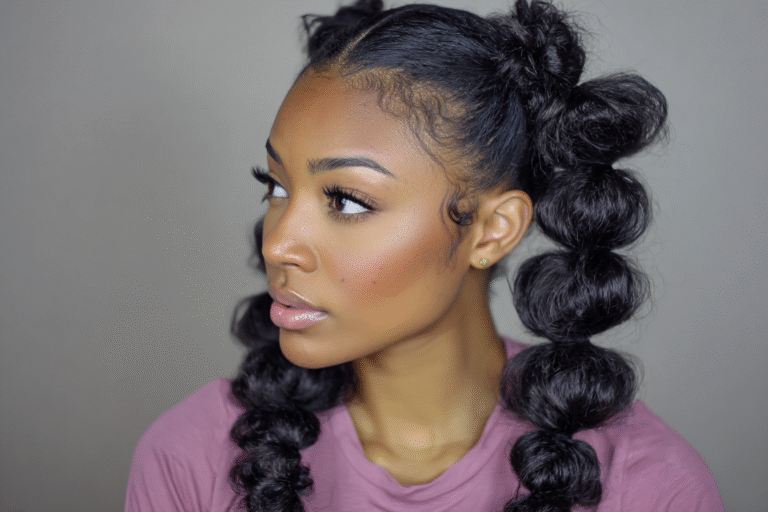
- For a grown-up pigtail, go jumbo, smooth the roots, and add a neat elastic or simple metal cuff.
- Half-up hack: pull the top section into two braids and leave the rest down to hide growth and freshen your look.
Shorter lengths can be tucked at the nape or pinned up. Longer lengths look great left hanging or wrapped into a low bun. These two-braid choices save time while keeping your look intentional and polished.
Twists That Look Like Braids (and Save Time)
Twists give a braided finish while cutting down styling time and effort.
Senegalese twists use two strands to make a rope-like shape. Flat twists lie close to the scalp and read like cornrows but with a softer texture. Passion twists add curly extensions, and Marley twists use Marley hair for a loc-like feel.
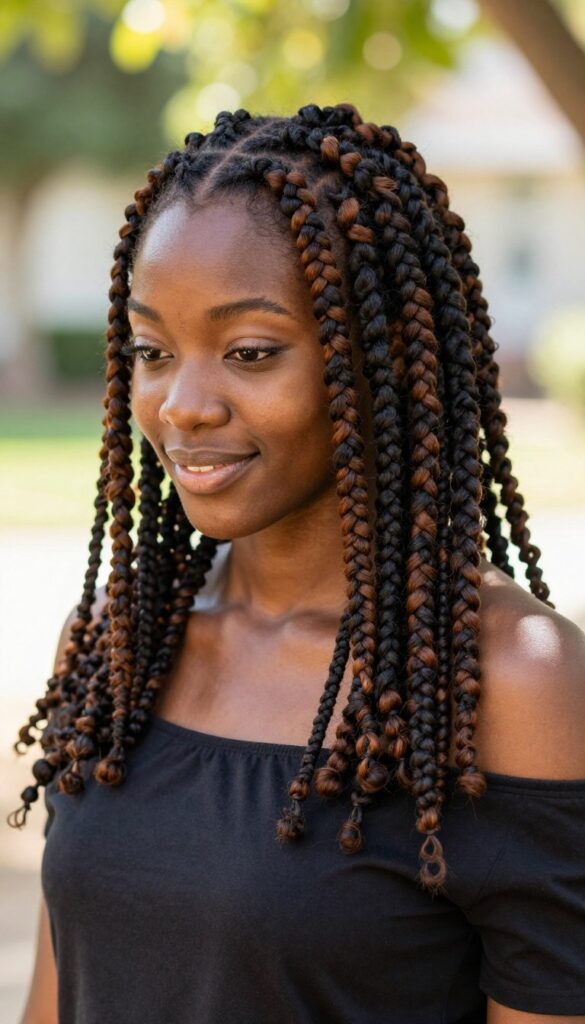
Try two-strand twists if you want the easiest start. Senegalese offers a sleeker look but takes a bit longer. Flat twists work well as a base when you want both protection and a neat pattern.
- Choose texture: sleek, fluffy, or curly to match your vibe and outfit.
- Use extensions to lengthen or add bounce; note that thicker extension packs change install time.
- Keep tension steady, smooth each section, and seal ends to keep the finish tidy.
- Style ideas: sweep twists to the side, pin back a few pieces, or combine several into one large updo.
- Comfort note: twists often feel lighter than dense micro-braiding, so they suit all-day wear.
Braided Ponytail Looks for Work, School, and Weekends
Turn a simple pull-back into a full statement with a braided ponytail that suits work or weekends.

A braided ponytail is one of the fastest ways to look put-together. Use it on natural hair or restyle existing braids for a fresh updo without a full reinstall.
Pick placement by vibe: high ponytail for workouts and casual days, mid ponytail for everyday balance, and low ponytail for interviews or office settings.
- Jumbo pony braid: moisturize, secure a high pony, wrap extensions at the base, then plait and finish with an elastic or bead.
- Crochet-pony workaround: make quick cornrows, add crochet hair, gather into a flowing ponytail, and you’re ready.
- Use side or face-framing braids to soften the look and add detail in seconds.
Protect the hairline by avoiding overly tight elastics and swapping placement each week. Finish with a wrapped base or a small edge swoop for a neat, professional finish.
Braided Buns and Updos That Make Braids Feel Brand New
Turn tired installed styles into fresh statements with a simple bun or wrapped updo. These moves refresh an existing style without a full reinstall and make daily styling faster.
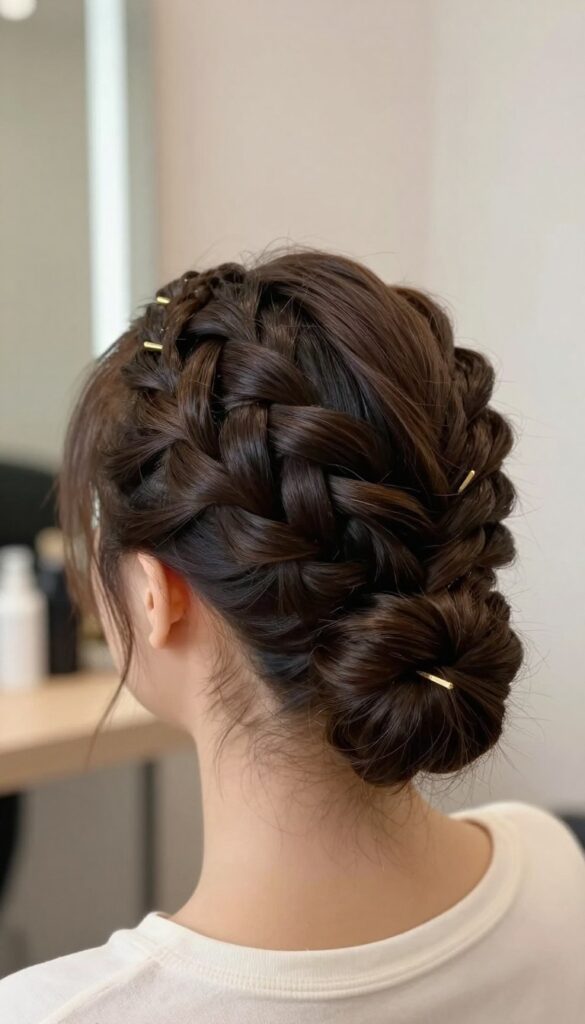
Box braids work great for a quick bun. Gather at the nape or top head, twist the lengths into a chignon or top knot, wrap the coil, then pin. Leave two tendrils to soften the face if you want a gentler look.
For more volume, try a braid-on-braid: combine several smaller braids into one larger braid, then wrap that into a bun. This gives a fuller shape and a cleaner finish without extra extension work.
Space buns are playful and easy. Split the hair, make two French braids back toward the crown, then wrap the ends into two buns. Use matching pins and check symmetry before locking them down.
- Crown pin-up: wrap a long braid around the perimeter like a halo and secure with bobby pins and a little grip product.
- Pin placement and a light oil add shine and reduce frizz.
- Protect at night with a satin scarf to extend the updo’s life.
Fulani-Inspired Braids and Beaded Details
Fulani-inspired styles pair neat cornrows at the front with looser side braids and eye-catching beads. This mix gives the head structure and movement at once.
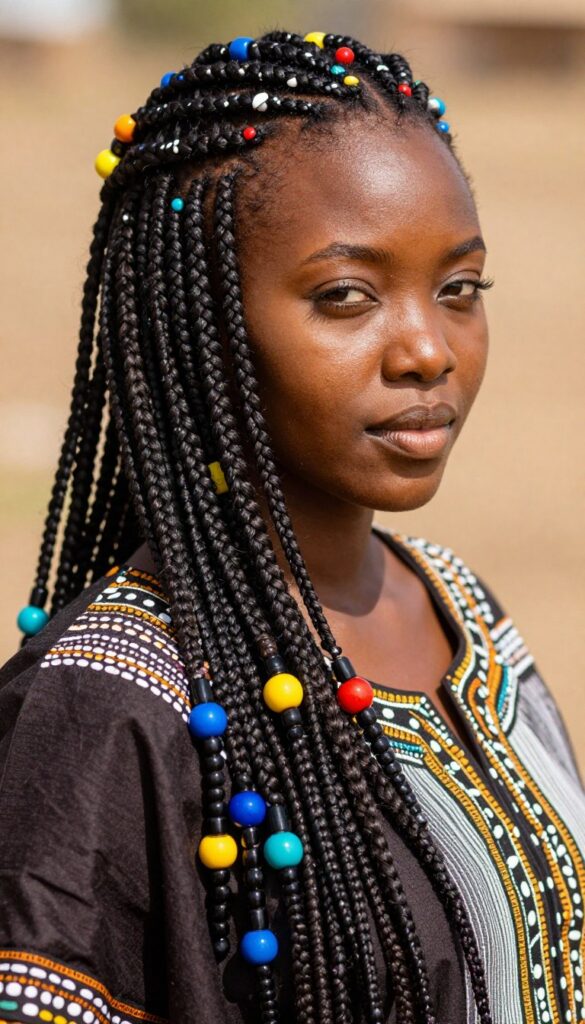
What makes a Fulani look? Think small-to-medium cornrows that begin near the hairline and taper into free braids. A single straight-back cornrow plus rows that sweep toward the temples creates the classic pattern.
- Simple plan: place 2–4 front-to-back cornrows, add a few loose side braids, finish with beads.
- Bead tips: pick bead size to match braid thickness, secure ends with a tiny elastic, and avoid piling on heavy beads.
- Accessory swaps: one gold cuff, a hair ring, or a single statement bead updates the look fast.
Soften the face with a side-swept braid or two that frame the cheek. Finally, protect the hairline—keep tension light, especially when adding metal cuffs near the front.
Short and Shoulder-Length Braids That Feel Lightweight
Short and shoulder-length styles are the lightweight secret that keeps a fresh look without the bulk.
A cropped box bob—chin to shoulder length—cuts weight while keeping shape. Choose medium-thick sections so the bob reads full without feeling bulky. Add small beads or a jewel at the tip to elevate the hairstyle without extra weight.
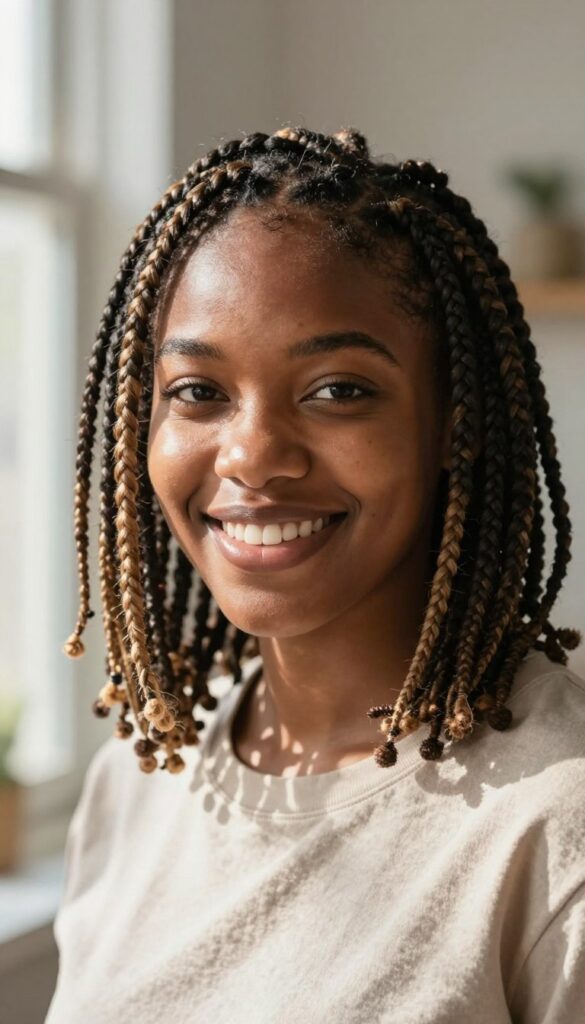
Nubian twist–inspired short twists sit just above the shoulder and give textured movement. They often install faster than long three-strand plaits and feel lighter on the scalp. Use natural strands or light extensions when you want extra length without drag.
- Why shorter helps: less pull at the crown and gentler tension at the edges.
- Styling ideas: deep side part, tuck-behind-the-ear, half-up mini pony, or a low nape bun.
- Maintenance: shorter styles rinse and dry faster, so they fit busy weeks and need less rest time between washes.
Color, Ombré, and Texture Upgrades That Take Seconds
A small shift in color or texture can instantly change your whole braid style without new parts or time spent.
Ombré works like a visual shortcut: pick a base shade and fade into a lighter end. Placement is simple — darker at the roots, lighter toward the tips — and you can go subtle or bold depending on contrast and length.

Try everyday-friendly palettes: a 1B/2 blend, soft auburn, or honey blonde face-framing pieces. Or add a single bold streak if you want one visible statement bit.
- Weave in a lighter color halfway down to create multi-level ombré without rebuying full packs.
- Leave 3–4 inches out, add mousse, and curl with flexi rods for roded end plaits that bounce.
- Loosen a few plaits or leave ends out for a lived-in, boho texture.
A little goes a long way: test one section before committing to a full head. Finish with a light oil or braid spray to keep color vibrant and texture soft.
Protective Styling Tips to Reduce Tension and Damage
The point of a protective style is to shield strands while keeping the scalp calm.
Knotless braid methods feed extension hair after you start with natural hair. That removes the tight knot at the root and cuts root stress. Traditional knotted starts can tug and add tension that, over time, leads to thinning and damage.
Weight and density matter. Many tiny sections add up and feel heavier than a few larger ones. Heavy installs can increase sweat during exercise and pull on edges.
- Tension checks: can you raise your eyebrows? Any burning or edge pulling? If yes, loosen the style or redo the tight sections.
- Simple maintenance: tie a satin scarf at night, gently cleanse the scalp, and apply a light oil to the hairline to reduce breakage.
- Wear-time guideline: aim for 4–6 weeks; some styles last up to 8 weeks with care. If you spot irritation or thinning, remove the style and treat with an anti-breakage product like Monoi Repairing Anti-Breakage Spray.
Conclusion
A few reliable options and small swaps are the secret to lasting, low-stress styling. Smart selection, clean prep, and simple switches matter more than elaborate technique.
Pick three to five favorites: one scalp-close look, a two-braid option, a ponytail, a bun or updo, and a small color or accessory upgrade. Rotate these choices so the scalp gets regular rest.
Protective styling is personal. The best option fits your schedule, feels comfortable, and helps your hair thrive. DIY simple two-braid looks, buns, and ponytails; book a pro for complex cornrow patterns or long-term installs.
Save this list, experiment with parts and small accessories, and let small changes keep everyday looks fresh and easy to wear.